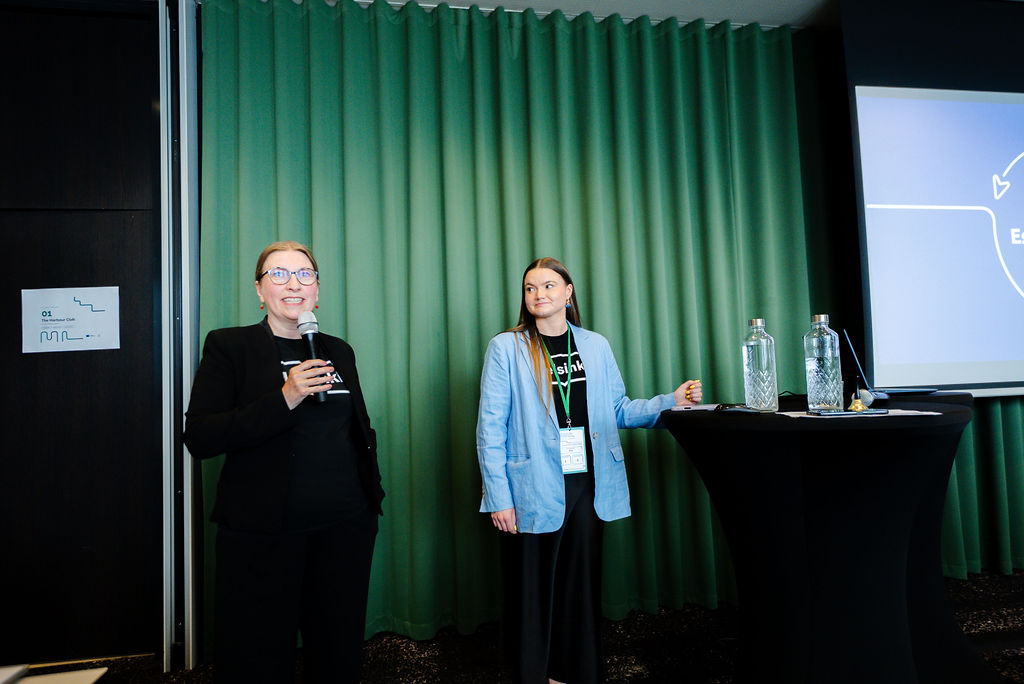
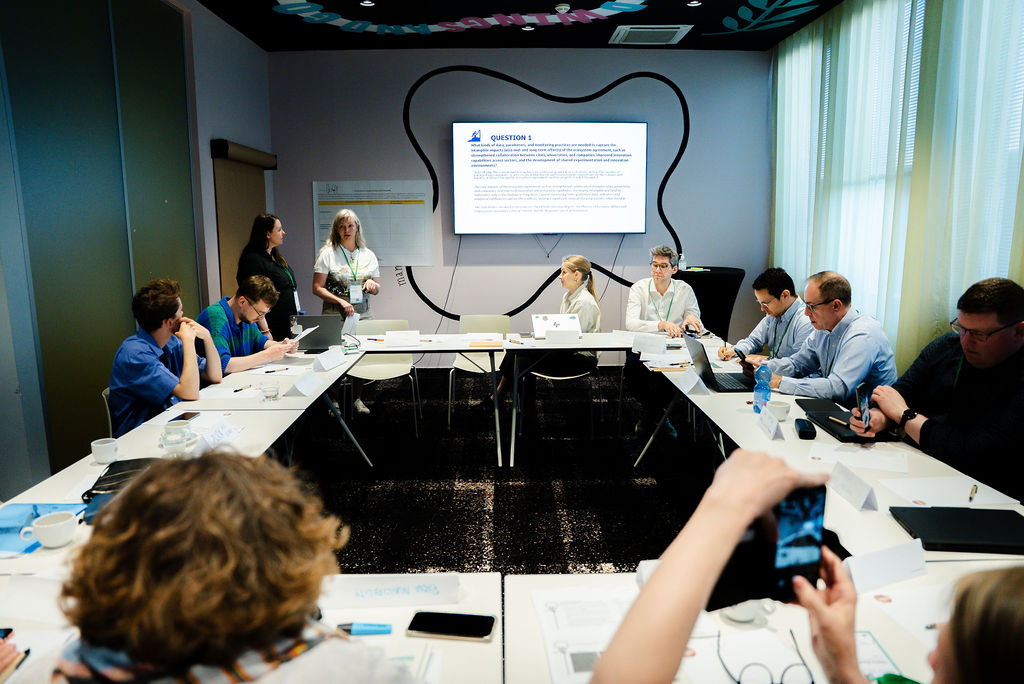
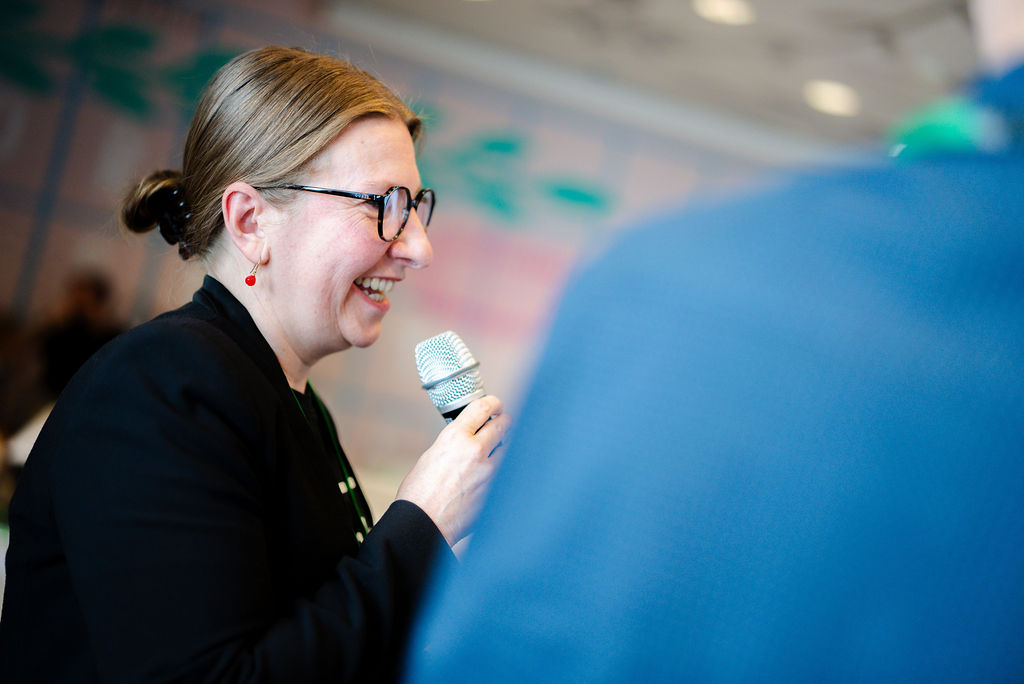
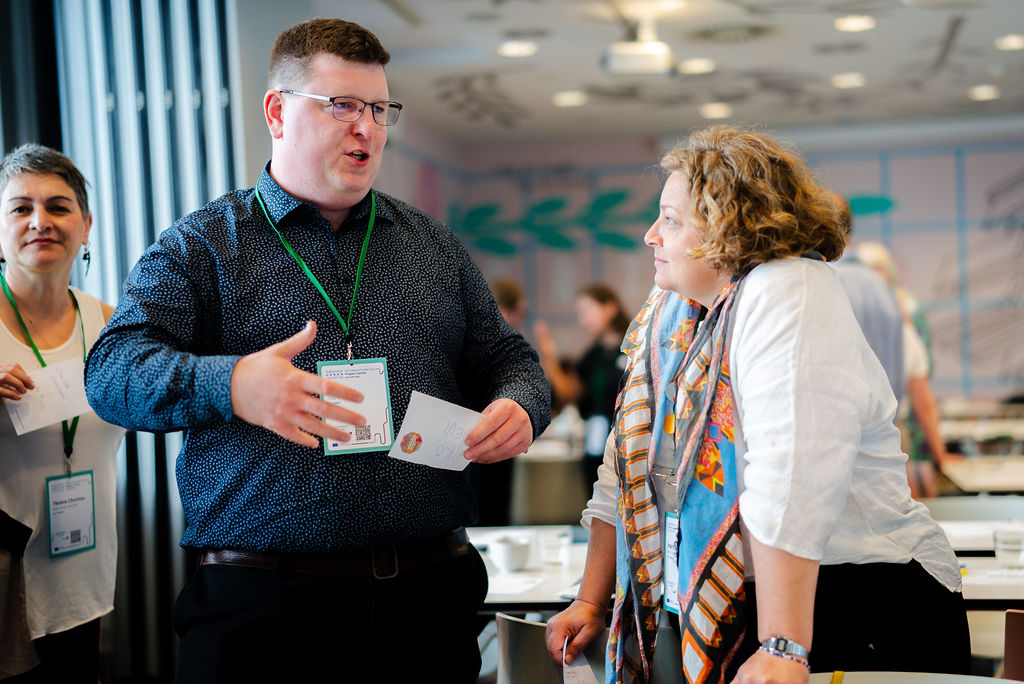
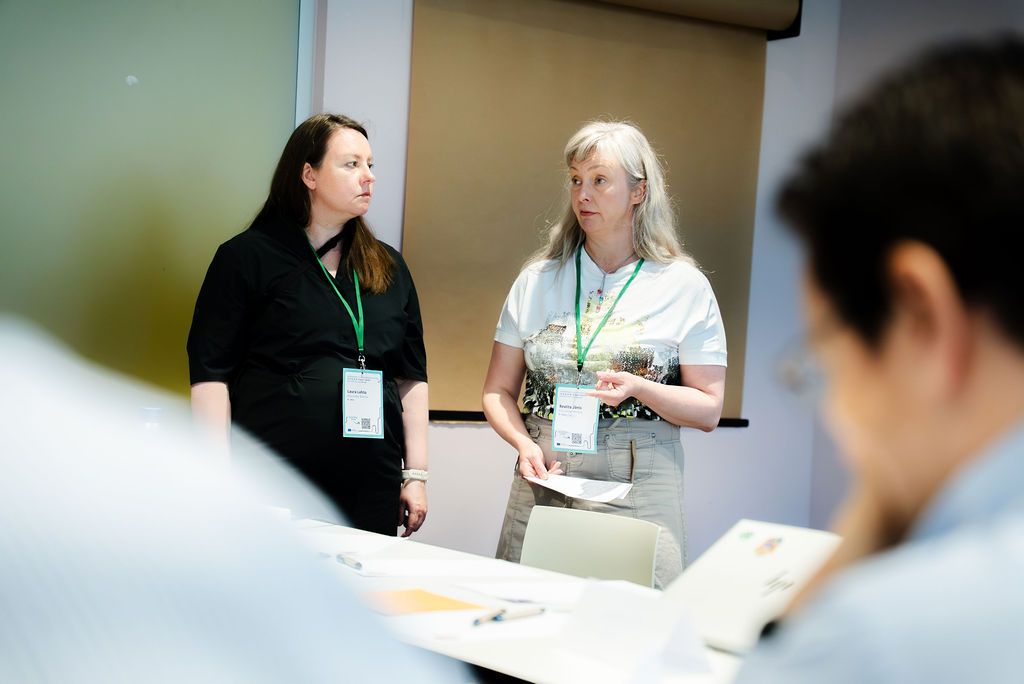
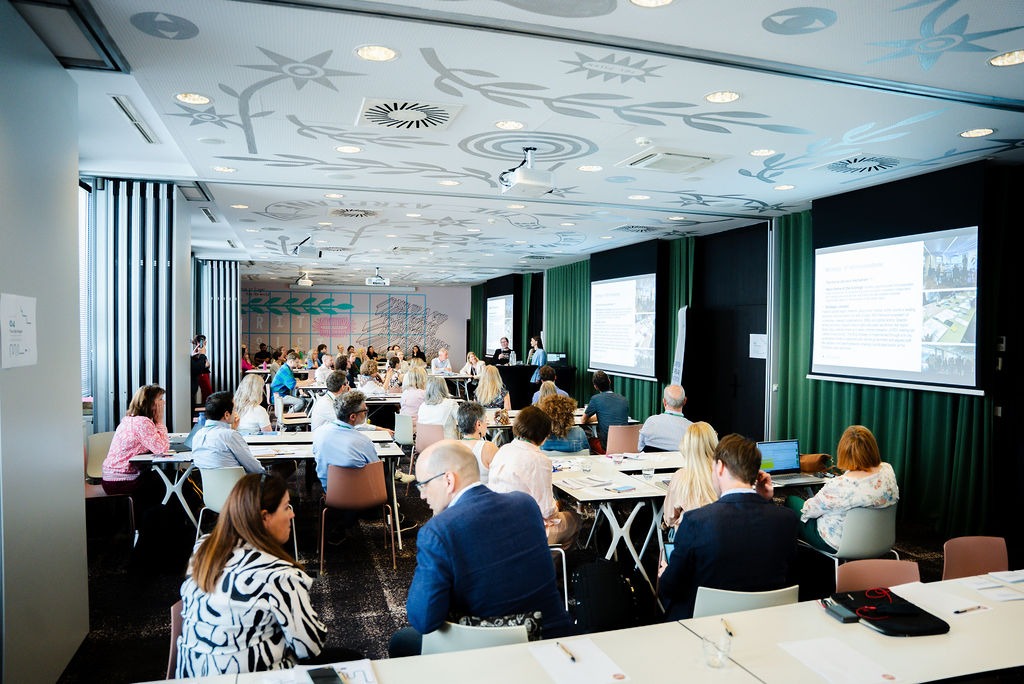
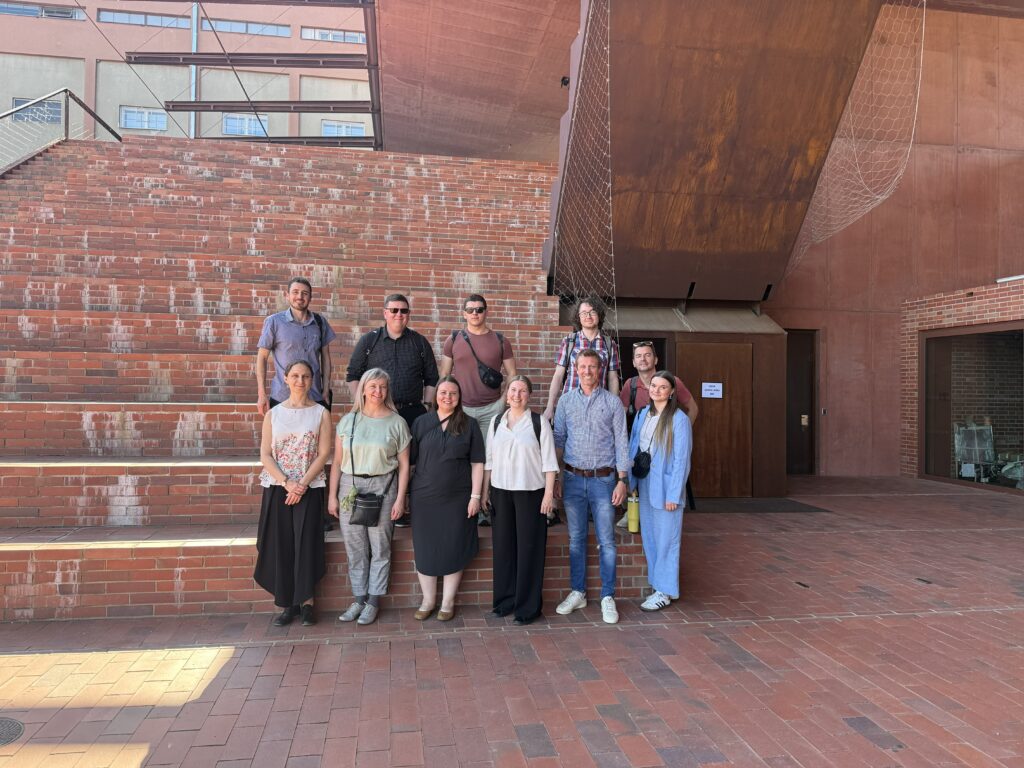
The HEVi coordination team participated in the EUI Peer Review event held in Prague at the end of May. The two-day intensive programme offered us a valuable opportunity to reflect on our own activities, share experiences with other urban development professionals, and gain new perspectives for our programme work. During the discussions, we explored three key questions related to demonstrating impact, business engagement, and collaboration between ecosystems.
Our first question focused on how we can better identify and demonstrate the impact of our ecosystem work. We have successfully collected extensive data on outputs such as projects, events, and other activities. However, a challenge has been to systematically show what kind of real change these actions create within the ecosystem.
A key takeaway was that measuring impact cannot rely solely on numerical indicators. Alongside them, we need storytelling that helps describe how collaboration emerges in practice, how competencies develop, and how different actors create value together. Going forward, our goal is to combine data with meaningful narratives in a way that makes impact visible, understandable, and credible.
The entire SUD portfolio of the Helsinki region (sustainable urban development ecosystem agreement funding) is roughly the same size as that of a small Greek town with a population comparable to a couple of neighbourhoods in Espoo. This makes the dynamics of influencing with EU funding very different, yet many of the urban development challenges remain shared. Peer reviewers from Granada, Coimbra, Padova, Jesolo, Tallinn, Prague, and Oulu, supported by EUI consultants, provided feedback and development suggestions for the HEVi programme. We were able to validate the quality and methodology of HEVi’s work.
-Saana Rantsi, City of Helsinki
Our second discussion focused on engaging companies as ecosystem stakeholders in situations where direct funding is not available. The most important lesson related to clarity and consistency in business collaboration.
First, we recognised the need to more clearly define our value proposition and the added value we offer to companies. If the value proposition is unclear, companies will find it difficult to understand why they should participate.
Second, we observed that we need to move from one-off encounters to more long-term collaboration. We need continuous participation pathways and tools that ensure cooperation does not remain fragmented but is built systematically over time.
Third, we must be able to identify and communicate the benefits of collaboration from both perspectives. It is not only about what companies gain, but also about how the collaboration creates value for HEVi and the wider ecosystem.
Our key conclusion was that impactful business collaboration is built on three elements: a clear value proposition, continuous interaction, and a shared understanding of the benefits of collaboration. Going forward, our goal is to build an operating model where companies clearly see the value of collaboration, remain engaged over the long term, and can simultaneously advance both their own business and the impact of the ecosystem.
”The organisers succeeded well in identifying peer reviewers who were well suited to work on these challenges with us. Although the comparison cities Prague, Brindisi, and Kavala are very different from each other, we noticed that the challenges are often quite similar.”
-Iiro Uotila, City of Vantaa
Our third question addressed strengthening collaboration between ecosystems and fostering new innovations at the interfaces between different actors.
The key lesson was that building connections needs to become more goal-oriented and impactful. Simply bringing actors to the same table is not enough; we need structures and practices that consistently support the creation of meaningful interactions over time.
At the same time, we also need to better assess the effectiveness of the methods we use. We need a deeper understanding of which forms of collaboration truly lead to innovation, new partnerships, and business outcomes.
”The process with EUI experts will continue, and it is important for us to receive a summary report that includes recommendations for concrete actions. In addition, experts will support us over the coming months to help us reach our goals and further develop our activities.”
-Reetta Jänis, City of Espoo
One of the greatest strengths of the EUI Peer Review process was the opportunity to learn from peer cities. While all participants shared a common goal of developing innovation ecosystems, the approaches, operating environments, and challenges varied significantly between cities. The discussions provided valuable perspectives on how different challenges can be addressed and what kinds of operating models have been developed across Europe to strengthen collaboration, impact, and business engagement.
At the same time, we received confirmation that the collaboration model developed in the Helsinki metropolitan area is unique in many ways and attracted interest among international partners. The peer review demonstrated that we have done many things right and built a strong foundation for ecosystem work. The process also provided new ideas and development directions that will help us take our activities to the next level. Based on these insights, it is natural to continue our work in even closer cooperation with international partners and to strengthen collaboration across regional and national borders.