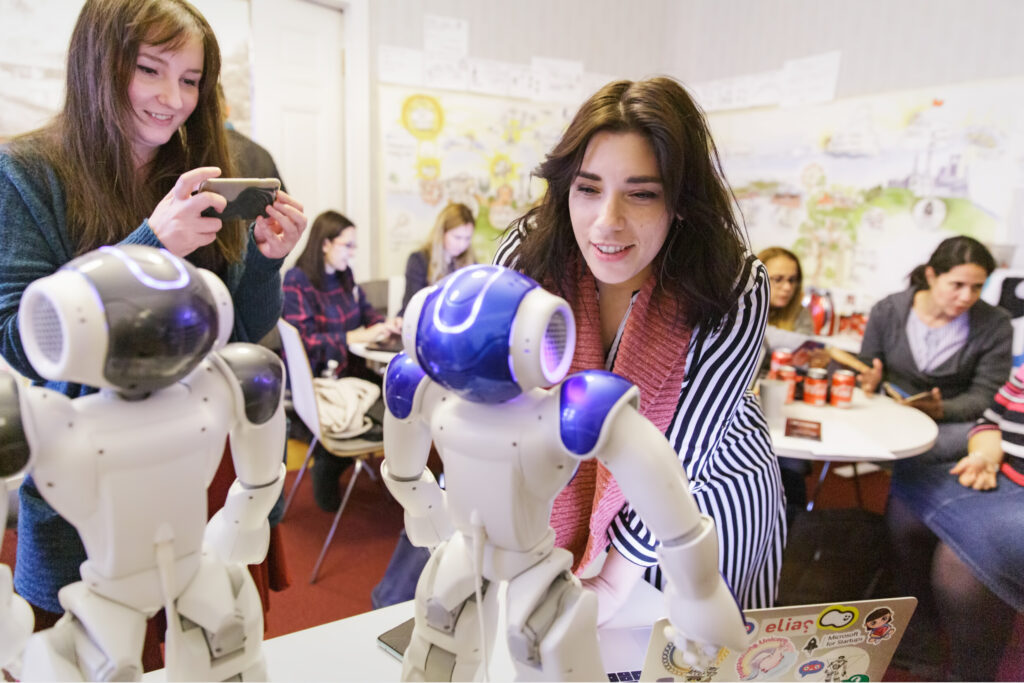
Last school year, teachers and students tested several educational innovations. These included a career guidance tool and a digital learning platform created by a teacher.
NexPath’s software solution saves career counsellors hours of preparation time. Students complete a 15 to 20-minute online questionnaire, and the results are presented to counsellors in an easy-to-use format. The goal is to make effective, high-quality career guidance available to an increasing number of students.
“The pilot delivered exactly what we were looking for: genuine feedback from real end users,” says Shahram Soboutipour, founder of NexPath.
During the pilot, approximately 150 students at two upper secondary schools became familiar with NexPath. At both schools, one career counsellor took an active role in testing and co-developing the software.
The counsellors found the structured summary of each student’s characteristics and strengths generated by NexPath to be extremely valuable. At Konepaja Upper Secondary School, NexPath also tested NexPlanner, a user interface designed for students. NexPlanner received positive feedback for enabling the simulation of different career paths during the counsellor’s assessment process.
According to Soboutipour, many aspects of the product evolved once the company had the opportunity to test it in a real market environment. It can be difficult to anticipate the precise expectations and requirements of end users.
“The most positive outcome was gaining insight into realistic and constructive expectations for the product. It gave us valuable direction on how we need to adapt the product to better meet users’ needs.”
Soboutipour describes the collaboration with Business Helsinki as clear and straightforward. Support was available whenever needed, and the pilot period met the company’s expectations.
Todo Groups was created by primary school teacher Kari Vitikainen from Kotka. He wanted to find better ways to motivate and support different learners. The platform helps teachers create clear and engaging learning pathways for their students.
In the pilot with Business Helsinki, Todo Groups focused on testing the platform in a real classroom and gathering feedback for further development.
The company first learned about the opportunity through the Helsinki Education Hub incubator.
“Whenever there is an opportunity to test our product, we’re eager to participate,” says Vitikainen, who is responsible for educational services and learning materials.
Todo Groups has previously tested the platform through academic collaborations. However, its main testing environment has been Vitikainen’s own classroom, where the platform is used daily.
The company had hoped to involve several teachers. In practice, recruiting busy educators proved difficult. As a result, the pilot was carried out with one classroom teacher.
Fortunately, the participating teacher was highly experienced in using educational technology. According to Vitikainen, the feedback discussions were both useful and inspiring.
Although the number of testers was limited, the company gained valuable experience from the pilot process itself. Working with public-sector organizations requires specific preparation and understanding.
“We would gladly work with Business Helsinki again. The biggest lesson was learning how to collaborate with the city. We gained insight into what municipalities expect from EdTech companies,” says Vitikainen.
EdTech companies can currently apply for pilots with Haaga-Helia and Laurea University of Applied Sciences. The pilots follow the company-driven Easy Access Co-Development model and are tailored to each case.
Applications can be submitted through Testbed Helsinki. The pilots last one to two months and are carried out as part of higher education courses. The call is part of the Immersive Learning Ecosystem IMMO project, which is co-funded by the European Union.
Text: Eetu Tuominen